
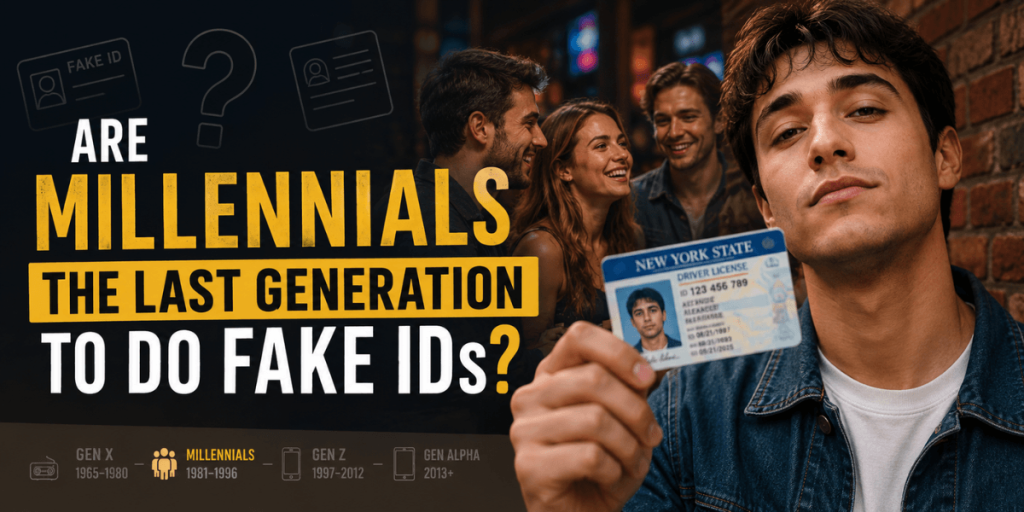
Fake IDs have been a cultural staple for decades. Millennials remember the thrill of handing a plastic card to a bouncer, hoping it would pass inspection. But that world is fading. Today’s young people face AI-powered verification systems that can spot a forgery in seconds.
Generational differences in identity fraud reveal how each generation approaches age verification differently. Physical IDs are no longer the only gatekeepers. Digital verification, biometrics, and blockchain are changing the game. The era of the simple fake ID may be coming to an end, and millennials might be the last to remember it.
The Millennial Fake ID Experience
Millennials grew up in an era where a physical ID was your ticket to social life. Getting a fake ID was almost a college tradition for many; around 40% of underage drinkers owned or used one at some point. The quality of these IDs varied, with some being poorly made and others using advanced printing methods.
The risks for millennials were real but different from today. Legal trouble could mean fines or a criminal record. There was also the danger of identity theft, as sellers often collected personal information. The future of fake IDs inthe digital verification era would have seemed unimaginable back then, as sophisticated digital threats like AI-generated deepfakes did not exist.
How Fake ID Usage Has Changed Over Time
Digital technology and social media have completely reshaped the fake ID market.
The Rise of Online Marketplaces
The internet transformed the fake ID market through online marketplaces. This made sellers easier to find and reach. Social media further changed things, as young people began sharing vendor experiences. Posts advertising forged IDs now appear on platforms like X and Telegram, with sellers claiming their IDs can pass checks at stores, bars, and concert venues.
The Digital Shift
The process today is more digital and more dangerous. Fraudsters use generative AI to create convincing fake documents. AI-generated fake IDs can now be made for as little as fifteen dollars in under an hour. This makes verification far harder than before.
The Role of Data
Stolen data plays a major role in modern fraud. A leaked dataset is often where it starts. AI sharpens the impersonation, while deepfakes strengthen the illusion. Synthetic identity fraud now costs US businesses an estimated $30 to $35 billion a year. Each piece makes the next one easier.
The Shift Away from Physical IDs
Physical fake IDs are becoming less common as verification systems get smarter. Digital deception is replacing the traditional card-based approach. Fraudsters now focus on creating synthetic identities rather than forging physical documents. This shift represents a fundamental change in how identity fraud operates.
The shift toward digital deception shows how identification is evolving. At IDpapa, we stay ahead of these changes with quality products. For anyone ready to buy a fake driver’s license, we set the standard. Get in touch today for exceptional quality!
Generational Differences in Identity Fraud
Each generation faces unique challenges in identity verification and fraud.
- The Tech-Savvy Paradox: Gen Z and Millennials are two times more likely to be scammed online than baby boomers. Overconfidence leads many to underestimate cyber threats.
- The Trust Issue: 70% of millennials do not always verify digital connections. One in ten has used a fake name or fake profile online.
- Generational Views on Online Safety: Nearly 70% of 16-24-year-olds encounter fraud each year, compared to 38% for those aged 45-54.
- The Digital Native Vulnerability: Only 20% of Gen Z report never being hacked, compared to 41% of baby boomers.
- The Shifting Risk Landscape: Physical fake ID use is declining, but digital identity fraud using AI is on the rise.
Are Fake IDs Becoming Outdated in the Digital Age?
Modern verification systems are making traditional fake IDs increasingly ineffective.
The Verification Arms Race
Counterfeiters and verifiers are locked in an arms race. Modern systems read data encoded in documents, and passports now carry NFC chips with biometric data. AI tricks like synthetic identity fraud mean face matching alone isn’t enough anymore. One researcher showed a fake identity clearing standard verification in just seven minutes.
The Rise of Digital Identity
The future of fake IDs looks uncertain as digital identity takes hold. Governments are exploring blockchain to strengthen ID security. The verification model itself needs to change, since old tools were built for older threats. Digital identity systems may eventually make physical fake IDs obsolete.
The Vulnerable Generation
Despite being digital natives, Gen Z faces new fraud risks. Fraud is getting easier with stolen data and AI. Physical fake IDs may decline, but digital fraud may rise in their place. The real question is not the existence of fraud, but the form it takes next. Social media has become the costliest channel, with Americans losing an estimated $119 billion annually to scams.
Millennials vs. Gen Z: How Fake ID Use Has Changed
Here’s how the approach, risks, and technology involved have shifted between generations.
| Feature | Millennials | Gen Z |
| Primary Method | Physical IDs from local sellers | Digital methods and online marketplaces |
| Technology | Basic printing and holograms | AI-generated documents and deepfakes |
| Verification | Manual inspection by bouncers | AI-powered verification and biometrics |
| Risk | Legal fines and criminal record | Identity theft and synthetic identities |
| Attitude | Seen as a rite of passage | More cautious and aware of digital risks |
Frequently Asked Questions
1. Did Millennials use fake IDs more than Gen Z?
Millennials grew up in an era where physical fake IDs were more common and easier to obtain. Millennials are the last generation to use fake IDs, as Gen Z faces stricter digital verification and more sophisticated fraud detection. The nature of the risk has simply shifted toward digital identity fraud rather than physical documents.
2. Is fake ID usage declining among younger generations?
Traditional physical fake ID usage may be declining due to advanced verification systems and biometric checks. However, digital identity fraud using AI and stolen data is on the rise. The methods are changing, not the behavior itself.
3. How has technology impacted fake ID trends over time?
Technology has transformed the market from simple paper cards to sophisticated scannable IDs. Now, AI and deepfakes are creating new forms of identity fraud that do not require a physical card at all. Digital verification systems are evolving to counter these threats.
4. Are digital verification systems replacing the need for fake IDs?
Digital verification systems like NFC chip reading and biometric checks are making physical fake IDs less effective. However, fraudsters are adapting by using AI to create synthetic identities and deepfakes, posing a new set of challenges.
5. What generational differences exist in identity fraud behavior?
Millennials are more likely to have used traditional fake IDs, while Gen Z is more exposed to online fraud and identity theft. Gen Z also shows greater vulnerability to online scams, despite being digital natives.
Conclusion
The evidence suggests traditional fake IDs are on the decline. However, identity fraud is not going away. It is evolving. Millennials may have been the last generation to widely use physical fake IDs. Gen Z is navigating a world where digital verification is the norm. The future of fake IDs in the digital verification era points toward digital deception rather than physical cards. The tools and risks are entirely new, even if the desire to bypass age restrictions remains. Each generation faces unique challenges in this changing landscape.
The landscape of identification is changing. At IDpapa, we stay ahead of these changes to serve you better. For those interested in novelty ID cards, we deliver quality you can trust. Connect with us today and see the difference!